
Zammad vs. Zendesk: Self-Hosted Alternative Without Vendor Lock-in


Many support teams start with a SaaS solution like Zendesk – quick to set up, feature-rich, large marketplace. But as requirements like data sovereignty, compliance, deep integrations, or cost predictability become more important, a different question arises:
Do we really need to run our ticketing system as SaaS – or is self-hosting the better option?
In this post, we compare Zendesk with Zammad – with a clear focus on Zammad as a self-hosted (on-prem/private cloud) alternative and how a managed hosting approach can offset the typical operational overhead of self-hosting.
Table of Contents
- Executive Summary
- Zammad vs. Zendesk Comparison
- When Zendesk Makes Sense – And Where Self-Hosted Zammad Wins
- The Core Difference: SaaS vs. Self-Hosting
- Cost Logic: How to Compare Fairly
- Security and Compliance
- Feature Perspective: What Matters Day-to-Day
- Operations in Practice: What Self-Hosting Means
- Migration Plan: From Zendesk to Zammad
- Decision Guide: 7 Questions for Clarity
- Conclusion
- Contact Us
- Sources and Further Reading
Executive Summary
- Zendesk is a comprehensive SaaS suite (ticketing, messaging/chat, help center, voice, AI/add-ons) that excels when you want as much "out of the box" as possible – but typically with per-agent costs and optional add-ons. (Zendesk Pricing)
- Zammad is a web-based open-source helpdesk (AGPLv3) that can be self-hosted – with full control over infrastructure, data storage, and integrations. There are no license fees for the software (when complying with license terms). (Zammad Documentation)
- The catch with self-hosting is almost always: Operations (updates, monitoring, backups, security hardening, incident handling). This is exactly where a managed hosting model comes in – at WZ-IT, we take over these tasks in a managed setup depending on SLA, on our infrastructure or in your cloud. (Zammad Installation & Setup)
Zammad vs. Zendesk Comparison
| Criterion | Zammad (Self-Hosted) | Zendesk (SaaS) |
|---|---|---|
| License Model | Open Source, AGPLv3; code belongs to Zammad Foundation | Proprietary platform/suite |
| License Costs | No license fees for usage (with AGPL compliance) | Per-agent/month: e.g., Support Team $19, Suite Team $55, Suite Professional $115, Suite Enterprise $169 |
| Operations/Ownership | You control infrastructure & data – updates/backups/availability are your responsibility (or a partner's) | Operations handled by vendor; focus on quick deployment |
| Data Location | Freely selectable (on-prem or your cloud/region); BYOI possible | Zendesk hosts service data primarily on AWS; data locality includes US/AU/JP/EEA |
| Omnichannel Agent UX | Multi-channel possible (email, phone/CTI, chat, social etc.) | Agent Workspace: cross-channel in one ticket interface |
| Integrations | REST API/integrations possible; high flexibility in IAM/network/monitoring | Thousands of marketplace apps + Developer API |
| AI | AI features in development; self-hosting/AI server approaches possible | Strong AI positioning; add-ons like Copilot $50/agent/month |
Important: Prices/plans change. Zendesk prices above are as of December 2025.
When Zendesk Makes Sense – And Where Self-Hosted Zammad Wins
Zendesk Often Fits When…
- You want an all-in-one SaaS suite and want to consistently outsource operations.
- You benefit heavily from a very large app/marketplace ecosystem.
- You map omnichannel processes deeply with Zendesk workspaces and routing concepts (depending on plan).
Zammad (Self-Hosted) Often Wins When…
- Data sovereignty and infrastructure control are not "nice to have" but hard requirements (e.g., your own cloud subscription, network segment, backup policy).
- You want to avoid vendor lock-in and build a system that fits your architecture – not the other way around.
- Cost predictability plays a major role: Zammad is open source, no license fees for usage (assuming AGPL compliance).
The Core Difference: SaaS vs. Self-Hosting
Zendesk: SaaS Convenience – With Per-Agent Costs
Zendesk is clearly designed as SaaS. This is evident not only in product positioning but also in pricing logic: Costs scale with agents, while additional feature packages run as add-ons (e.g., Copilot as an add-on).
For many teams, this is perfectly fine – until team size, ticket volume, or feature needs grow significantly (or you start thinking about "enterprise controls").
Zammad: Control Through Self-Hosting – With Operational Responsibility
Zammad is a web-based open-source helpdesk. The software remains open source under the GNU AGPLv3 license; the code belongs to the Zammad Foundation according to documentation. Additionally: There are no license fees for usage as long as AGPL conditions are met. (Zammad License FAQ)
The operational catch is openly documented: In the self-hosted variant, updates, backups, and availability are your responsibility (or your operations partner's).
Why Managed Self-Hosting Is Often the Best Mix
Many organizations want the control of self-hosting but not the complete operational work (24/7 monitoring, patch windows, restore tests, security hardening, incident response).
This is exactly what a managed setup is designed for: At WZ-IT, we handle monitoring, updates, backups, security hardening, and incident handling in managed operations – depending on setup and SLA, on our infrastructure or in your cloud.
Cost Logic: How to Compare Fairly
A common mistake in comparisons: "Zendesk costs X, Zammad costs 0." This falls short because with self-hosting, costs are not in licenses but in infrastructure + operations.
Zendesk: Predictable Per-Agent Costs
Zendesk publishes per-agent prices depending on plan (examples, annual billing):
- Support Team: $19/agent/month
- Suite Team: $55/agent/month
- Suite Professional: $115/agent/month
- Suite Enterprise: $169/agent/month
Add-ons can add significant weight, e.g., Copilot $50/agent/month (annual).
Zammad Self-Hosted: No License Fees – But Operational Costs
Zammad itself is free to use (assuming AGPL compliance). But you need to add:
- Infrastructure (VMs/containers/Kubernetes, storage, network, possibly HA)
- Operations (monitoring, patch/update processes, backups/restore tests, security hardening)
For professional installations, TLS/reverse proxy, backup concept, monitoring baseline, documentation and handover are typically also relevant – plus enterprise features like VPN, SSO, MFA, audit logging, and DR plan depending on target architecture.
Managed Hosting as Comparison Baseline
If you don't want to handle operations internally, managed hosting is the clean comparison baseline. On our Zammad service page, entry for "Enterprise Managed Hosting" is available on request (modular pricing: service level, apps and compute selectable individually).
Interpretation: This is how you compare "SaaS license costs" against "managed operations + infrastructure" – not against "0".
Security and Compliance
Zendesk (SaaS): AWS-Based Hosting
Zendesk describes in the Trust Center that service data is primarily processed in AWS data centers and mentions data locality including US, AU, JP, or EEA. (Zendesk Trust Center)
The Zendesk DPA also states that service data is primarily hosted in AWS data centers that may have ISO 27001/SOC2/PCI-DSS certifications, and that encryption (e.g., TLS in transit, AES-256 at rest) is used. (Zendesk DPA)
Zammad (Self-Hosted): Compliance Becomes Architecture Work
Self-hosting is not an automatic "GDPR turbo" – but it gives you the levers: location, encryption, access, logging, retention and deletion rules, network segments, VPN access, etc.
For enterprise setups, components like VPN access (WireGuard/NetBird/Tailscale), SSO integrations (Keycloak/Authentik/Azure AD), MFA, audit logging & compliance, and DR plan are relevant.
Backups for Zammad include database, application data, and Elasticsearch index; restore concept including test restores and optional DR scenarios are part of a professional operations approach.
Feature Perspective: What Matters Day-to-Day
Agent Experience and Omnichannel
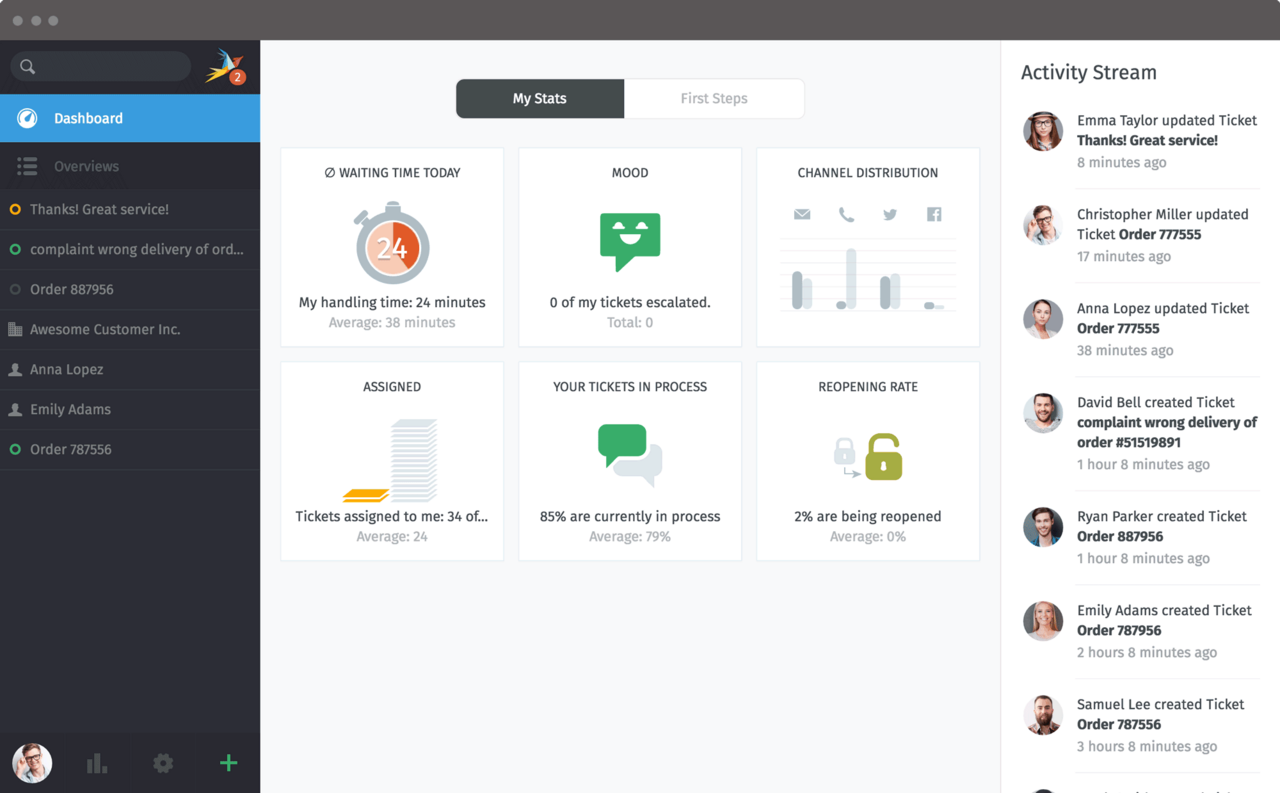
Zendesk has a clear concept with the Agent Workspace to work cross-channel in one ticket interface without being bound to the original channel.
Zammad also focuses on multi-channel support (including email, phone/CTI, chat, and social channels – depending on setup/integrations) and aims for central ticketing + automation.
Knowledge Base / Self-Service
Zammad is described as a platform with integrated Knowledge Base (since version 3.0) for public or internal content. Zendesk features Help Center / Knowledge functions as a central suite component.
Integrations
Zendesk references "thousands of pre-built apps and integrations" via Marketplace and the Developer API. Zammad self-hosting often wins with "hard" integration into IAM/network/monitoring/CTI – because you can freely design the environment (e.g., AD/LDAP, SSO/MFA, logging/monitoring).
Operations in Practice: What Self-Hosting Means
When Zammad is self-hosted, you (or your partner) must ensure:
- Regular updates/patches
- Monitoring & alerting
- Backups including restore tests
- Security hardening (firewall, rate limiting, IP filters, Fail2Ban, etc.)
- Incident handling and SLA processes
WZ-IT offers either:
- Bring Your Own Infrastructure (BYOI): Installation on your infrastructure (on-prem or in your cloud), full data control, individual configuration.
- Managed Setup: Ongoing operations including monitoring, updates, backups, security hardening, incident handling (depending on SLA).
Migration Plan: From Zendesk to Zammad
A migration rarely fails due to technology – but rather due to missing mapping, missing test migration, or "big bang" without fallback. A proven approach:
- Requirements Workshop: Channels, ticket types, SLAs, roles/permissions, integrations, reporting.
- Target Architecture & Sizing: On-prem vs. cloud, HA requirements, backup/DR goals, security zones.
- Test Installation / Pilot: Basic configuration, groups, roles, workflows, initial integrations.
- Migration Concept: Data model mapping (tickets, users, organizations), import path (API/scripts/tools), test migration.
- Training & Cutover: Go-live plan with downtime window, parallel operation/fallback, final data transfer.
- Operations: Patch management, monitoring, backup/restore routine, security reviews.
Decision Guide: 7 Questions for Clarity
Zammad (Self-Hosted) is very likely the better choice if you…
- Must keep data in your cloud/on-prem.
- Want to avoid vendor lock-in and maintain exit options.
- Need to deeply integrate IAM/security (SSO, MFA, VPN, audit logging).
- Don't want costs to scale per agent, but prefer to optimize infrastructure/operations.
- Want to adapt the system to internal processes long-term.
Zendesk often remains right if you…
- Want maximum SaaS convenience and the per-agent logic works for you.
- Benefit heavily from Zendesk marketplace apps.
- Want to "just turn on" AI add-ons/platform features in the short term.
Conclusion
Zendesk is a strong, comprehensive SaaS platform. At the same time, Zammad as an open-source helpdesk is the strategically better answer for many organizations when data control, independence, and self-hosting capability are central.
The key is not to think of self-hosting as "DIY" but professionally: Architecture, security, backups, updates, and SLAs must be solid. This is exactly where a managed hosting partner can make the difference – so you can leverage the benefits of open source without getting stuck on operational tasks in daily business.
Contact Us
If you want to self-host Zammad (on-prem or in your cloud) but don't want to handle operations internally: We support with installation, security setup and – if desired – ongoing managed operations including monitoring, updates, backups, and incident handling.
→ More about Zammad Managed Hosting
Sources and Further Reading
- Zammad Documentation
- Zammad License FAQ
- Zammad Pricing
- Zendesk Pricing
- Zendesk Trust Center
- Zendesk Agent Workspace
- Zendesk Data Processing Agreement
- GNU AGPLv3 License
Note: This post does not constitute legal advice. For license and compliance questions (e.g., AGPL obligations), you should have your specific use case legally reviewed.
Written by
Timo Wevelsiep
Co-Founder & CEO
Co-Founder of WZ-IT. Specialized in cloud infrastructure, open-source platforms and managed services for SMEs and enterprise clients worldwide.
LinkedInLet's Talk About Your Idea
Whether a specific IT challenge or just an idea – we look forward to the exchange. In a brief conversation, we'll evaluate together if and how your project fits with WZ-IT.
Trusted by leading companies












Timo Wevelsiep & Robin Zins
CEOs of WZ-IT