

Notification service
ntfy, its configuration, cache and attachments are deployed reproducibly and updated through controlled procedures.


We design, install and operate ntfy as a notification gateway - including HTTP API, topic permissions, clients, monitoring, backups and documented push paths.
Companies worldwide trust WZ-IT
The following are trademarks of their respective owners: ntfy (the ntfy project). WZ-IT is an independent service provider and has no business, partnership, or contractual relationship with these companies. We offer independent migration, installation, hosting, and operations services.
ntfy accepts messages through a simple HTTP publish-subscribe interface and delivers them to subscribed web, mobile and desktop clients. Scripts and systems can publish messages through PUT, POST, JSON or the CLI, among other options.
WZ-IT designs the reverse proxy and TLS, cache and attachments, users and topic ACLs, access tokens, rate limits, client access, Prometheus metrics and recovery as a cohesive operating path.
Delivery behaviour depends on the platform, client and server configuration. For instant iOS notifications, a self-hosted ntfy server needs an upstream connected to Firebase and APNS; the official flow sends a poll request and then retrieves the actual message content from the self-hosted server.
We clarify which clients and push paths are required, whether external push infrastructure is acceptable, and how topic names, logging, retention and permissions should be designed. This keeps the technical data-flow decision transparent.
Production ntfy operations involve more than an HTTP endpoint. We connect TLS and reverse proxy, topic access, cache, attachments, clients, push paths, rate limits and monitoring into a documented notification path.
ntfy, its configuration, cache and attachments are deployed reproducibly and updated through controlled procedures.
Users, tokens and read or write permissions are configured for private or deliberately public topics.
HTTP publishers, clients and platform-specific push dependencies are integrated transparently.
Health checks, Prometheus metrics, updates, backups and capacity limits are integrated into operations.
We distinguish technical message transport, integrations and business escalation decisions.
| Area | Responsibility | Scope and boundaries |
|---|---|---|
| Architecture and deployment | WZ-IT | ntfy, TLS, reverse proxy, persistent cache, authentication data, attachments and reproducible deployment. |
| Runtime and updates | WZ-IT | Maintenance of the agreed instance with version review, backups and controlled updates. |
| Monitoring and backups | WZ-IT | Monitoring health, resources and delivery paths and protecting the agreed persistent data. |
| Publishers and integrations | Shared | WZ-IT connects systems technically; the customer supplies events, credentials and the required notification logic. |
| Clients and external push paths | Shared | We document platform dependencies; the customer approves permitted clients and external push infrastructure. |
| Content, recipients and escalation | Customer | The customer is responsible for notification content, recipient groups, prioritisation and business response to messages. |
| Adapters and escalation workflows | Optional WZ-IT service | Custom publishers, middleware, response channels and multi-stage escalation are implemented as a separate module. |
Publish messages using PUT, POST, JSON, curl or the ntfy CLI and subscribe without an application-specific SDK.
Distribute notifications through topics and connect multiple web, mobile or desktop clients to defined channels.
Enrich messages with titles, priorities, tags, attachments, scheduled delivery and supported action buttons.
Configure user roles, access tokens and read or write permissions for individual topics or topic patterns on private instances.
Connect ntfy to monitoring, backup, automation and other systems through its HTTP interface and make use of available project integrations.
Integrate the health endpoint and optional Prometheus metrics into operations and monitor cache, delivery paths and resource usage.
A clearly defined operating scope instead of an opaque hosting flat fee.
We set up a test instance for you, usually on the next business day. No payment details required. After seven days it is deleted unless you continue.
Compute, applications, storage and response are shown separately. You can see what ongoing operations include and which requirements need a technical assessment.
We also design custom ntfy architectures, integrations and migrations. Contact us for a technical assessment.
One managed standard ntfy application is included in the Starter workload. Business and higher levels add a flexible operations allowance for planned work during regular service hours. Select compute, additional applications, storage and the appropriate service level.
A workload is one compute instance with the applications agreed for it.
One standard app per workload is already included. Additional dedicated servers count as separate workloads.
€7.99 excl. VAT per additional 100 GB per month, including daily encrypted offsite backup with 7-day retention. Billing is based on provisioned capacity, not actual usage.
We also implement custom backup schedules and retention periods. For example: daily backups retained for 30 days and one monthly backup retained for 12 months. Scope, storage requirements and additional costs are agreed separately.
+€299 excluding VAT per workload and month
Standard hosting runs on a single instance without high availability. Availability for custom architectures is agreed separately.
Zero downtime on request
Distributed operation with several instances, a database cluster and rolling updates, so that a node failure causes no interruption. Only for applications suited to it; design and price after technical assessment.
This page covers installation and the agreed platform operations for ntfy. Custom code, the access layer and special confidentiality requirements remain clearly separated responsibilities that can be added when needed.
Maintain the application
Keep custom extensions, interfaces and dependencies controlled, updated and supportable.
from €699.90 excl. VAT / month
View serviceSecure access
Add identity-based access and private network paths as a separate operational layer.
from €349.90 excl. VAT / month
View serviceOperate confidentially
For professional secrecy holders, define contractual, access and infrastructure requirements in a dedicated operating model.
from €499.90 excl. VAT / month
View serviceThree relevant adjacent paths instead of a long list of further products.
All prices are net and exclude statutory VAT. The offers are addressed to businesses.
View the overall systemEnquiry
Briefly describe the current state and objective for ntfy. We assess infrastructure, integration, and ongoing operations.
User count is not the only factor. Message rate, parallel subscriptions, retention, attachments, WebSocket or long-poll connections and external push paths shape operations.
| Usage scenario | Technical starting point | Key factors |
|---|---|---|
| Internal system notifications without large attachments | S, persistent cache and auth data | A suitable starting point for a low message rate and few parallel subscriptions. |
| Multiple teams, monitoring systems and mobile clients | M, persistent data and separate attachment storage | Message rate, retention, attachments and required push paths are assessed beforehand. |
| Many persistent connections or traffic spikes | L or custom sizing | Proxy connections, file descriptors, rate limits, cache and client behaviour shape the architecture. |
| Business-critical alerting | Custom multi-channel architecture | ntfy, source systems, external push services, escalation and alternative notification paths must be considered together. |
Large attachment volumes, custom publishers, multi-channel escalation, high connection loads and special push architectures are not included in the general workload price.
ntfy can run as a managed workload or in a customer environment. Mobile push paths and possible external dependencies are documented beforehand.
Dedicated workload with agreed compute, cache, attachment storage, backups, monitoring and service level.
Operations in the customer's account with existing monitoring, network and security services integrated.
Operations in the internal network for local publishers and clients with controlled external access where required.
Internal publishers reach ntfy over private connections; mobile and external clients use defined public or private access paths.
ntfy sits between event sources and recipients. We document which data leaves the self-hosted server, how topics are protected and which delivery paths apply to each client platform.
Monitoring, backup, automation, applications, scripts and HTTP or CLI clients.
Public or private endpoints, correct proxy headers, WebSockets, rate limits and network rules.
Roles and read or write permissions for individual topics or patterns with restrictive default access.
HTTP publish-subscribe, topic distribution, cache, scheduled messages, attachments and web interface.
Persistent message history for the configured period as well as users, tokens and access rules.
Files with defined size, retention and bandwidth limits and agreed backup coverage.
Web, mobile and CLI clients, external push paths where required, health checks and Prometheus metrics.
For instant iOS delivery through the official app, a self-hosted instance needs an upstream connected to Firebase and APNS. The documented poll request does not contain the actual message content; the content is retrieved from the self-hosted ntfy server afterwards.
Answers about licensing, topic protection, the iOS data flow, integrations, backups and delivery boundaries.
Yes. The official ntfy repository states dual licensing under the Apache License 2.0 and GPLv2. WZ-IT operates the software as an independent service provider and checks modifications and redistribution against the applicable licence.
Yes, following a technical assessment. We review the version, configuration, authentication data, access tokens, cache database, attachments, reverse proxy, publishers and clients in use. The migration is planned with protected source data, a test instance and a controlled cutover; transient messages outside the configured retention period cannot be recovered retrospectively.
Publishers can use HTTP PUT or POST, JSON, curl and the ntfy CLI, among other options. We define the endpoint, authentication, topic, retry and error behaviour for every connected system.
No. ntfy is open by default. For private instances, we configure authentication, access tokens, topic ACLs and typically restrictive default access. The reviewed configuration, rather than a hard-to-guess topic name, provides the access boundary.
iOS restricts background processing. The official ntfy configuration therefore describes an upstream that wakes the app through Firebase and APNS. The self-hosted server sends a poll request containing the message ID and a derived topic value; the app then retrieves the actual message content from the self-hosted server.
The server, web interface and various direct subscription paths can be self-hosted. Mobile background delivery behaviour still depends on the operating system, client and configuration. Without the documented iOS upstream, notifications can arrive with a delay, so we establish the required clients beforehand.
Depending on the setup, we protect authentication data, access tokens, configuration, cache database and attachment storage. Message history is intended only for the configured cache duration; this does not automatically make ntfy a durable event queue or an audit-proof event archive.
Systems that support HTTP can generally publish messages. The project also documents numerous integrations and provides a health endpoint and optional Prometheus metrics. We review authentication, payload, error paths and rate limits for every connection.
A blanket delivery guarantee would not be credible because the source system, network, ntfy, client and potentially external push services are involved. For critical alerting, we design delivery-path monitoring, escalation rules and an independent secondary notification channel where required.
As an alternative to managed hosting in the data centre, WZ-IT provides the hardware, configures ntfy, and handles hardening, monitoring, updates, backup and technical support. Access can be limited to the internal network or enabled through VPN and existing identities.
from EUR 349 excl. VAT / month · plus one-time provisioning and initial setup
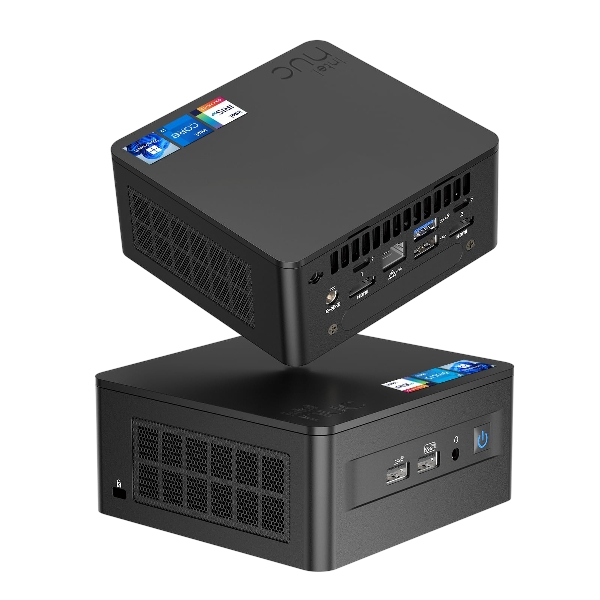
These solutions are often used together with ntfy
These solutions offer similar functionalities and can be evaluated together
No risk: worst case, you leave with a clearer understanding of your project than before.


“WZ-IT's advice on our Azure migration was technically sound and completely non-binding right from the intro call - we took away a great deal.”










“WZ-IT moved our studio infrastructure from decentralised individual devices to a central platform: every site is securely connected via VPN, new devices are onboarded automatically and an entire site is provisioned from a template, without manual steps on location. What impressed me most is the breadth and depth of their knowledge: Timo and Robin are not a typical IT provider who sets up a server and leaves. The two of them think their way into highly complex infrastructure and software topics, work through every requirement we put in front of them, and build networking, provisioning and operations so that everything fits together in the end. WZ-IT is an excellent partner for complex software, network and architecture projects.”

Steve Kirchner
Managing Director, nextGYM GmbH


“Professional, honest and technically thoroughly sound: WZ-IT set up our Proxmox and backup infrastructure securely and future-proof. The consulting from Timo and Robin was objective and needs-driven, the implementation smooth and the final documentation exemplary. You can tell immediately that business-critical infrastructure is thought through holistically from the outset here and implemented with clear ownership.”
Pascal Block
Project Manager, Stadtwerke Brühl GmbH
Stadtwerke Brühl - municipal energy and infrastructure utility.

“Communication with WZ-IT was open, friendly and professional from the very beginning. Mr. Wevelsiep and Mr. Zins responded to every one of our questions patiently, promptly and respectfully, and contributed their own suggestions and good ideas on how to modernize our server infrastructure and adapt it even better to our needs. Throughout, WZ-IT consistently kept our need for data sovereignty and GDPR compliance in mind. Even short-notice adjustments and change requests from our side were implemented quickly and patiently and integrated consistently into the overall concept. From planning to the final handover, every step was documented transparently and comprehensively - so if a provider change should ever become necessary, the documentation would let us onboard a successor into our infrastructure very quickly. We are extremely satisfied with WZ-IT and hope to continue working together for a long time.”
Christoph Mußmann
Project Officer, DGHO e.V.
DGHO - German Society for Hematology and Medical Oncology.

“I got to know Timo and Robin as dedicated and professional partners who make a lot of things possible for their clients that initially seem impossible. I felt very well advised. The services offered have thoroughly convinced me. (translated)”
Andrea Pawlowski
Communications Manager, Golem.de
Golem.de - leading German IT news outlet.

“While looking for a partner to integrate a local AI solution, we came across Timo and Robin - and could not have made a better decision. They quickly understood our requirements and solved technical challenges competently and pragmatically. We were particularly impressed by the straightforward collaboration, their high level of expertise and the speed of implementation. We are delighted to have Timo and Robin at our side as reliable business partners and look forward to our next projects together. (translated)”
Henrik Jeche
Head of IT Administration
ml&s - full-service provider for the electronics industry.


“With Timo and Robin, you're not only on the safe side technically - you also get the best human support! Whether it's quick help in everyday life or complex IT solutions: the guys from WZ-IT think along with you, act quickly and speak a language you understand. The collaboration is uncomplicated, reliable and always on an equal footing. That makes IT fun - and above all: it works! Big thank you to the team! (translated)”
Sonja Aßer
Data Manager, ARGE
ARGE Neue Medien - master data & digital standards for plumbing and building technology.

“I recently worked with Timo and the WZ-IT team, and honestly, it turned out to be one of the best tech decisions I have made for my business. Right from the start, Timo took the time to walk me through every step in a simple and calm way. No matter how many questions I had, he never rushed me. The results speak for themselves. With WZ-IT, we reduced our monthly expenses from $1,300 down to $250. This was a huge win for us.”
Aleksandr Shuliko
CTO, EVA Real Estate
EVA Real Estate - leading real-estate agency in Dubai.


“WZ-IT manages our Proxmox cluster reliably and professionally. The team handles continuous monitoring and regular updates for us and responds very quickly to any issues or inquiries. They also configure new nodes, systems, and applications that we need to add to our cluster. With WZ-IT's proactive support, our cluster and the business-critical applications running on it remain stable, and high availability is consistently ensured. We value the professional collaboration and the noticeable relief it brings to our daily operations.”
Pascal Hakkers
Aphy AG
Aphy AG - AI platform for hotel back-office.


“WZ-IT provided very competent support in implementing our server and virtualization infrastructure. As part of the project, a Proxmox-based virtualization environment was set up along with a virtual machine for our application systems. Additionally, a structured backup concept was implemented. A particular focus was on security: the setup of a VPN tunnel and the clean implementation of encryption and access concepts were professionally executed. The structured consulting as well as the reliable and swift implementation deserve special mention. We are very satisfied with the services provided and are happy to recommend WZ-IT.”
John Hellmerichs
Managing Director, AInergy GmbH
AInergy - consultancy for energy and facility management.

“We have had very good experiences with Mr. Wevelsiep and WZ-IT. The consultation was professional, clearly understandable, and at fair prices. The team not only implemented our requirements but also thought along and proactively. Instead of just processing individual tasks, they provided us with well-founded explanations that strengthened our own understanding. WZ-IT took a lot of pressure off us with their structured approach - that was exactly what we needed and is the reason why we keep coming back. (translated)”
Matthias Zimmermann
Managing Director, Annota GmbH
Annota - healthtech startup with an AI documentation assistant.

“Timo and Robin from WZ-IT set up a RocketChat server for us - and I couldn't be more satisfied! From the initial consultation to the final implementation, everything was absolutely professional, efficient, and to my complete satisfaction. I particularly appreciate the clear communication, transparent pricing, and the comprehensive expertise that both bring to the table. Even after the setup, they take care of the maintenance, which frees up my time enormously and allows me to focus on other important areas of my business - with the good feeling that our IT is in the best hands. I can recommend WZ-IT without reservation and look forward to continuing our collaboration! (translated)”
Sebastian Maier
Managing Director, Yonju GmbH
Yonju - business coaching and AI products.


“Counting on WZ-IT team was crucial, their expertise and solutions gave us the pace to deploy in production our services, even suggesting and performing improvements over our configuration and setup. We expect to keep counting on them for continuous maintenance of our services and implementation of new solutions.”
Gabriel Sanz Señor
Managing Director, Odiseo Solutions
Odiseo Solutions - software engineering for the space industry.


“WZ-IT supported us professionally with the provisioning and setup of NetBird. Alongside the technical implementation, we also received well-founded advice on connecting our Kubernetes clusters. The recommendations were concrete and directly actionable. The collaboration was consistently reliable, fast and on equal terms. We can recommend WZ-IT without reservation.”
Kai Clauß
Head of Development, SweetConnect GmbH
SweetConnect - cross-manufacturer Industry 4.0 platform for confectionery production.

Whether a specific IT challenge or just an idea - we look forward to the exchange. In a brief conversation, we'll evaluate together if and how your project fits with WZ-IT.
Companies worldwide trust WZ-IT