


Search Company Documents with AI
An internal AI assistant answers questions from your documents, wikis and databases - with citations and permissions enforced technically before retrieval. Built on an open stack and operated by us or by you.






Your company knowledge is scattered across documents, wikis, tickets and databases - and whoever searches asks colleagues instead of systems. An internal AI assistant based on RAG connects these sources to a language model: answers come from your content, with citations, and everyone sees only what they are allowed to see. We build it as your system - from mapping the sources through the permission architecture to production operations.
Answers from your own sources
Documents, wikis, tickets, databases. Every answer names the passage it came from, so people can check it instead of having to believe it.
Knows your permissions
Whoever may not open a document never gets it quoted. Permissions apply before retrieval, not as a filter on the result.
Runs on your stack
Open components, European or local models, operated by us, in an EU cloud or on your hardware. The system belongs to you.
The local platform underneath the internal assistant
AI Cube Pro provides Open WebUI, an agreed local model and the prepared operating foundation inside your company network. Automated data sources, identity integration, permission logic and custom RAG pipelines are designed around your existing systems.
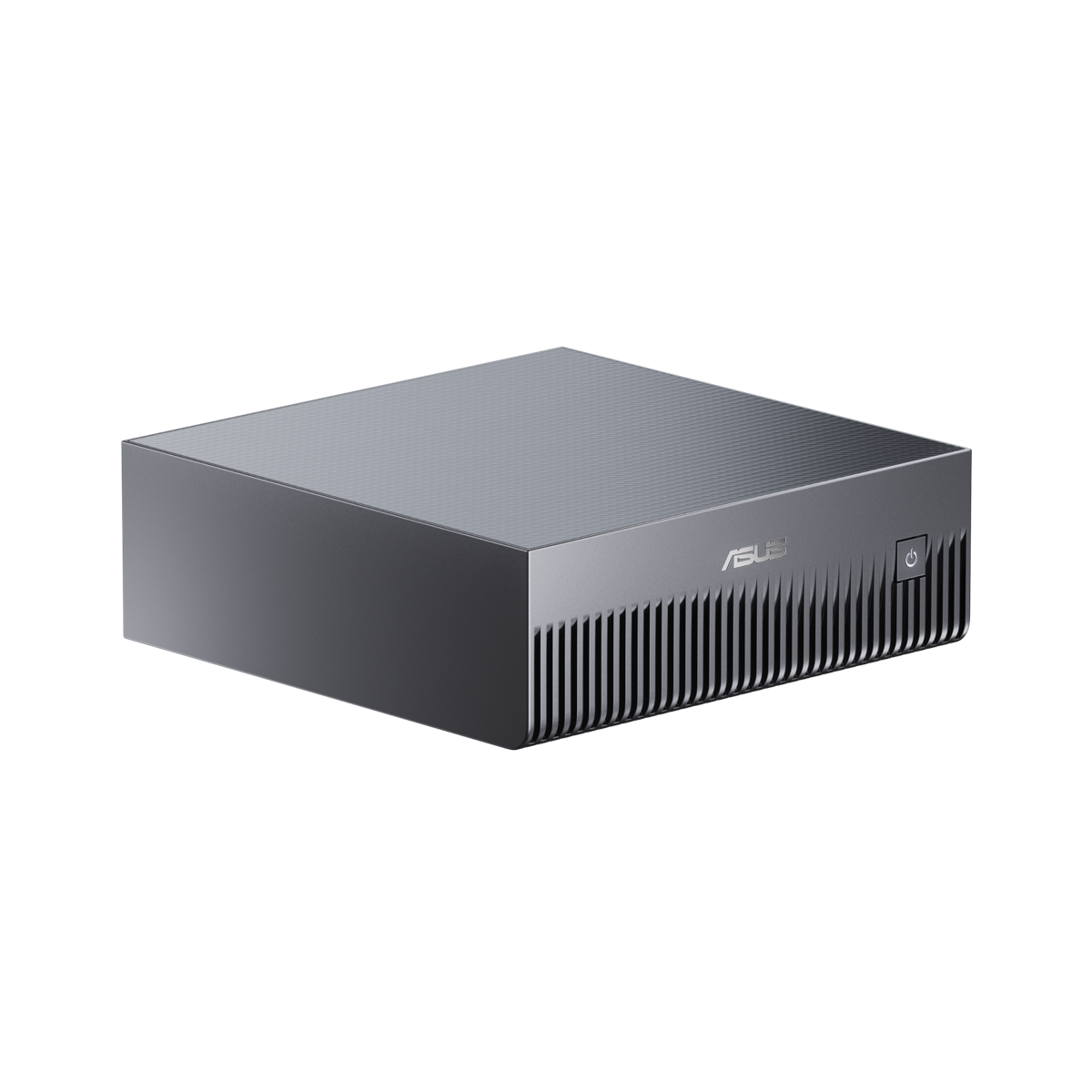
Ready for use in under two weeks after configuration approval
AI Cube Pro
from €899 excl. VAT / month
plus one-time provisioning and initial setup · 6-month minimum term
- Hardware with 128 GB unified memory
- Open WebUI and a local model runtime
- A local model agreed, installed and tested in advance
- Base setup, hardening and functional testing
- Initial setup and support included
- Monitoring, updates and ongoing technical operations
- Configurable for GDPR and Section 203 requirements
Expandable when required
RAG, data sources, integrations, secure connectivity and custom workflows are scoped separately.
Operable for the long term
Technical operations are included in the monthly rate. Available service levels and extended integrations are agreed to match the use case; §203 scopes include a DPA, limited administrative rights, written secrecy obligations for the people involved and instruction on the criminal consequences.
AI knowledge management for business
The AI knowledge base connects approved company sources and returns answers with citations. Staff no longer search each system separately and still see only content they are allowed to access.
Connect existing knowledge
The knowledge base can draw from these systems
The source systems remain authoritative. Connectors carry content, versions, and permissions into the search index and refresh it on an agreed schedule.
Example with a source citation
Question: What notice period applies to the maintenance agreement for North Customer?
The agreement may be terminated with three months' notice at the end of its term. The assistant displays the relevant passage and links to the valid agreement version instead of merely producing a plausible answer.
Source: North Customer maintenance agreement · section 8.2 · version dated 14 March 2026
Onboarding
Question: How do we actually do this here?
Assistant: The assistant pulls the answer from the handbook, the wiki and old tickets - with a link to the passage, so new colleagues learn the source and not just the answer.
Quotes and contracts
Question: What exactly did we commit to for this customer?
Assistant: It finds the relevant passage in your contract and quote archive and cites it, instead of someone searching through five file shares.
Technical documentation
Question: How was this customer's setup configured?
Assistant: It answers from runbooks, tickets and documentation and shows which document in which version the answer came from.
Support and service desk
Question: Have we seen this error before?
Assistant: It searches resolved tickets and knowledge articles and returns the earlier fix, including the ticket number.
Policies and compliance
Question: What are we allowed to do here?
Assistant: It answers from the valid version of your policies and names the version date, instead of an outdated PDF in a folder.
Research in your own material
Question: What have we already written on this topic?
Assistant: It finds text modules, earlier projects and references. That is the starting point for a draft, not a replacement for the author.
How we build the assistant
The bottleneck is rarely the model. It is the sources, the permissions and the question of whose version counts.
Map the sources
We map where knowledge lives: file shares, Nextcloud, wiki, ticket system, databases. This regularly reveals which store nobody maintains any more - that is a result too.
Define the permission architecture
Which group may see which source? Permissions come from your directory service and are applied on every request, before anything is retrieved.
Prepare the content
Documents are split into meaningful passages (chunking), translated into vectors (embeddings) and stored in a vector database, usually Qdrant. This is the technical part nobody sees later.
Connect the assistant
The interface is Open WebUI or your existing channel. Behind the LiteLLM gateway sits one model or several - interchangeable without users noticing.
Measure answer quality
With test questions from real daily work we check whether answers are cited and correct. Langfuse makes cost, latency and quality visible instead of a matter of opinion.
Operations and handover
New documents are pulled in automatically. You receive infrastructure code, runbooks and training; operations by us is an option, not a condition.
The questions internal assistants fail on
An assistant that shows too much gets switched off. That is why these are the first decisions in a project, not the last.
| Concern | What is built against it |
|---|---|
| The assistant quotes a document I am not allowed to see | Permissions are applied before retrieval: what your group cannot open is not part of the search space for that request - it is not merely hidden in the result. |
| Permissions change, the index stays old | Group membership is read from the directory at query time, not frozen at indexing time - with a cache of a few minutes that is deliberately invalidated on critical role changes. Document shares come from the index and are checked against the source again before citation. |
| Nobody can check whether the answer is correct | Every answer names document, passage and version. Without a cited passage the assistant says it does not know. |
| The model invents something plausible | Answers are formed from the retrieved passages, not from training knowledge. That does not rule out errors, but it makes them checkable - which is exactly what the citation is for. |
| Our data ends up with a US provider | The stack runs on European infrastructure or your hardware, with a European model (Mistral) or local models. You decide what leaves the building. |
| We are tied to the provider forever | You receive infrastructure code, configuration, knowledge base and documentation. Taking over yourself is a documented path, not a contract dispute. |
How the permissions actually hold
The most common design mistake is telling the language model what it must not show. That is not access control, it is a request. Permissions apply at three points - and only the middle one decides.
At indexing time
The connector carries the permissions over from the source: owner, direct shares, group shares, inherited folder rights. They are normalised and stored on every passage - not only on the document, because passages are what gets retrieved.
Before the vector search
This is where it is decided. The signed-in user's groups are resolved and turned into a mandatory search filter. The database only ever sees the query with that filter attached. What the user may not see is not a worse match - it is no match at all.
At citation time
Before output, the retrieved passages are checked against the source again. A share may have been revoked between the indexing run and the query. This second check costs milliseconds and catches exactly the case that would otherwise be expensive.
Three designs, three outcomes
| Where the check sits | What happens when a permission is revoked | Does it hold? |
|---|---|---|
| In the prompt ("do not show anything from folder X") | Nothing. The passage is already in the model's context and can come back out through a differently phrased question. | No |
| After the search, as a filter on the result list | The hit disappears from the list - but it was already retrieved, and the number of hits reveals that something is there. | Partly |
| Before the search, as a condition of the query | The passage is outside the search space. It cannot be retrieved, cannot be counted and cannot be inferred. | Yes |
On 17 October 2025 the German Data Protection Conference (DSK) published guidance on RAG systems, recommending among other things permission and role concepts as well as access restrictions on the vector database. We build along that line - and we lay the architecture open so your data protection officer can examine it rather than having to take it on trust.
What about Microsoft 365 Copilot?
The question comes up in every second conversation, so here is the honest answer rather than the sales answer.
Take Copilot if
- Your relevant knowledge sits essentially entirely in Microsoft 365 - SharePoint, OneDrive, Teams, Exchange.
- Your permissions there are already properly maintained. Copilot inherits them, and that is its strength.
- You hold M365 licences anyway and the per-seat add-on adds up for you.
- Processing in the Microsoft cloud is acceptable for your data.
Take your own assistant if
- Your knowledge is spread out - Nextcloud, a DMS, a wiki, file shares, an ERP.
- Professional secrecy, trade secrets or contract terms rule out processing outside your control.
- You want to choose or change the model yourself rather than being given one.
- You do not want to pay per head, because only part of the workforce needs the system.
- You want catalogue, configuration and index back if you switch providers.
The two are not mutually exclusive. Some organisations use Copilot for office work and run their own assistant alongside it for the corpora that do not belong there. For context: Copilot reaches external sources through connectors. For the usual source types - Confluence, wikis, file shares, SQL, CRM - those are indexing connectors, so your content ends up additionally in the Microsoft index. There is no prebuilt connector for Nextcloud, and building an indexing one yourself is the expensive route.
The works council has a say - earlier than most plans assume
An internal assistant logs who asked what. That makes it objectively capable of recording behaviour or performance - which triggers a co-determination right under section 87(1) no. 6 of the German Works Constitution Act. It does not matter whether you intend to monitor. It matters whether the system could.
- 01
Involve the works council before the selection
Not before the rollout, before the decision. A body handed a finished system negotiates differently from one that helped write the requirements.
- 02
Define what is logged - and what is not
Operations need the timestamp, the number of hits and whether an answer was sourced. The question verbatim together with the person is rarely needed for analysis and turns the assistant into a monitoring instrument.
- 03
Analytics only in aggregate
The quality report answers which topics go unanswered - not who asked how often. Person-level analysis needs its own stated reason.
- 04
Put the result in a works agreement
Purpose limitation, logging scope, retention, analysis rights, shutdown. In writing, before the system goes live - after that you negotiate from the weaker position.
We are not a law firm and replace neither counsel nor your data protection officer. We provide the technical description your body needs to understand what it is deciding on - and we build the boundaries the way you agreed them.
What determines the price
A number before the corpus analysis would be a guess. These six points determine it - and you can judge in advance where you stand.
- ·The number and type of sources. One system with a clean interface is a different matter from four grown file shares.
- ·The state of the permissions there. Maintained groups in the directory are the cheap case; historically grown individual shares the expensive one.
- ·The share of PDFs and how structured they are. Processable with a text layer, scanned only with OCR beforehand.
- ·The number of departments with different views of the same corpus.
- ·Operating model: with us, with you, or handover after acceptance.
- ·Whether a works council is involved - that costs no development time but calendar time, and it belongs in the plan.
How the price is made up
One-off: corpus analysis, connecting the sources, permission model, test questions and acceptance. Ongoing: operations, model and security updates, re-indexing, quality report. How the corpus analysis is charged is settled in the first conversation.
What sits underneath, technically
The implementation is called retrieval-augmented generation, or RAG: your documents are split into passages and stored as vectors. On every question the matching passages are retrieved and handed to the language model as context. The model formulates from those passages - and only from those. That is why it can name the source, and why the answer changes the moment you change the document.
The building blocks are open source and individually replaceable. None of them ties you to us:
Qdrant: vector database
Stores the passages as vectors and finds the ones that match by meaning, even when the question is phrased differently from the text.
DetailsLiteLLM: model gateway
One entry point for all models: European ones such as Mistral, local ones, or both. Switch without touching the application.
DetailsLangfuse: reporting
Shows what is being asked, what it costs and where answers are weak. Without measurement, quality stays a gut feeling.
DetailsOpen WebUI: interface
The chat interface for your staff, with user management and a connection to your existing login.
DetailsWe run the same stack ourselves
The WZ-IT offer finder on this website runs on exactly this stack: visitors describe their project in their own words, the system maps it to the right solutions via semantic search and a curated knowledge base, with source references and follow-up questions. What we build for you, we operate ourselves.
- Qdrant as the vector database for semantic search
- LiteLLM gateway and Mistral as the European model for inference
- Langfuse for observability and cost and quality measurement
- Own infrastructure, privacy-focused - no data outflow to US LLM providers
The stack we build for you
When an internal assistant does not pay off
We would rather build a smaller system that holds than a large one nobody opens after three months.
The knowledge is in people's heads, not in documents
Before a knowledge assistant can provide answers, expertise must be captured and reviewed. Our knowledge transfer pilot processes your interviews and documents with subject-matter approval. Your team can add further content independently.
Nobody knows which version counts
If three versions of the same handbook are in circulation, an assistant only makes the confusion faster to retrieve. Clean up first, then connect.
Permissions are unresolved
Without clean groups and ownership nobody can say who may see what. That is organisational work no system takes off your hands.
It is a handful of always-identical questions
Then a good FAQ page or a form is cheaper and faster. An assistant pays off where the questions are varied and the sources are many.
Honestly upfront: we have advised against projects because the documentation did not hold. An assistant does not make poor sources better - it only makes it visible faster that they are poor.
RAG for professional secrecy holders?
For law firms, medical practices, notaries & more we build the assistant locally - the data stays in-house, and we take on a written secrecy obligation as a contributing person.
Defined first step
Make one knowledge source usable in two to three weeks
The RAG sprint adds a tested company knowledge set, citations, permissions path and subject-matter acceptance to the AI platform.
Capture expertise
Make interview-based knowledge usable
We build a solution that processes your interviews and documents, makes approved knowledge accessible through chat and lets your team add further content.
Specific use case
AI Service Assistant
Search manuals, fault codes and service knowledge with AI. WZ-IT builds your service assistant with source references, machine context and expert review.
Enquiry
Assess an internal AI assistant
Name the knowledge sources, user groups, and key questions the assistant should answer.
Knowledge navigator
When public or association knowledge should be opened up in a guided way.
Agents
When something should be done, not just answered: tickets, workflows, systems.
Local AI server
AI Cube with 128 GB, Open WebUI, an agreed model and complete base setup.
Operations layer
Monitoring, updates, backup and SLA for day-to-day operations - optional and cancellable.
Frequently asked questions about the internal assistant
Answers to the most important questions
An AI knowledge base makes approved company sources searchable in natural language. Documents, wikis, tickets, DMS platforms, file shares, or databases are indexed; on a question, the system retrieves relevant passages and cites them. The source systems remain authoritative, and permissions have to apply before retrieval.
At indexing time the shares are carried over from the source and stored on every passage. Before each search the signed-in user’s groups are resolved from the directory and turned into a mandatory filter - the database only ever sees the query with that filter. Before output the hits are checked against the source again, in case a share was revoked in the meantime. What matters is that the filter sits before the search and not in the prompt.
All common formats - unstructured texts (PDFs, Word documents, Markdown), semi-structured data (JSON, XML), APIs, databases (SQL, NoSQL), knowledge graphs, Confluence, SharePoint, and many more. We analyze your specific data sources and develop the appropriate connectors.
Every answer names the document, passage and version it came from - one click is enough to verify it. If the assistant finds no cited passage, it says so instead of formulating something. That is why citation is not an extra but part of the architecture.
Either a European model such as Mistral via the LiteLLM gateway, or an open-source model run locally on your hardware. The application always talks to the gateway, never directly to the model - switching is therefore a configuration change, not a rebuild.
Both options are possible. For high requirements regarding data sovereignty and control, on-premises or hybrid is recommended. Cloud solutions offer flexibility and easier scaling.
An important part of a RAG solution is updating and synchronizing between the underlying data sources and the vector index. We establish a process for regular data ingestion, monitoring, and versioning of your vector index.
No - RAG significantly reduces the risk of hallucinations through the use of reliable data sources, but it does not eliminate them completely. We complement technical measures with high-quality data basis, metadata selection, and an evaluation system for answers.
No, and this is the most common design mistake. A prompt is an instruction, not access control. If the passage is already in the context, it can come back out through a differently phrased question. Access rights have to take effect technically before the search, so that impermissible content is never retrieved in the first place.
Groups are read from the directory at query time, not from a copy in the index. A change therefore takes effect with the next query. We cache groups for a few minutes because querying on every search would be needlessly slow - for critical role changes the cache can be invalidated deliberately.
As a rule, yes. A system that logs who asked what is objectively capable of recording behaviour or performance - which triggers a co-determination right under section 87(1) no. 6 of the German Works Constitution Act, regardless of whether monitoring is intended. Involve the body before the selection, not before the rollout. We supply the technical description it needs for its decision.
Copilot is the shorter route if your knowledge sits essentially entirely in Microsoft 365 and permissions there are maintained - it inherits them, and that is its strength. Your own assistant pays off if your knowledge is spread out (Nextcloud, DMS, wiki, file shares, ERP), if professional or trade secrecy rules out processing outside your control, if you want to choose the model yourself, or if a per-seat licence does not add up because only part of the workforce needs the system.
We name the price after the corpus analysis, because before that it would be a guess. It splits into one-off - analysis, connecting the sources, permission model, test questions, acceptance - and ongoing: operations, model and security updates, re-indexing, quality report. It is driven by the number and type of sources, the state of the permissions, the PDF share, the number of different views and the operating model.
It says so. An answer without a sourced passage is the most expensive mistake a system can make on an internal corpus - which is why the assistant only formulates from retrieved passages and otherwise hands over. How often that happens is in the quality report, and the topic list from it doubles as your editorial backlog: you see what people ask about and what has no content.
Yes. You get infrastructure code, configuration, knowledge base and operations documentation in a documented format. The corpus itself was always yours - the assistant lays a layer over it and does not pull your content into a system it cannot leave.
With an assessment: which sources exist, who may see what, which questions should be answered? From that comes a first production use case on a clearly bounded set of sources. Further sources are added afterwards without rebuilding the system.
The stack belongs to you - not us
- Open stack: Open WebUI, vLLM, LiteLLM, Qdrant, Langfuse
- Handover package included: IaC, runbooks, documentation, training
- Operations optional and cancellable - self-takeover is a documented path
Runs where you want
Let's talk about your project - honest and no strings attached
- Straight with Timo and Robin - no sales team, no pitch
- An honest take, including when we are not the right fit
- Concrete next steps for infrastructure, software or AI
No risk: worst case, you leave with a clearer understanding of your project than before.


“WZ-IT's advice on our Azure migration was technically sound and completely non-binding right from the intro call - we took away a great deal.”
In-depth guides on this topic
What clients say about working with us
From local AI integration to architecture, data sovereignty and ongoing operations.











“WZ-IT moved our studio infrastructure from decentralised individual devices to a central platform: every site is securely connected via VPN, new devices are onboarded automatically and an entire site is provisioned from a template, without manual steps on location. What impressed me most is the breadth and depth of their knowledge: Timo and Robin are not a typical IT provider who sets up a server and leaves. The two of them think their way into highly complex infrastructure and software topics, work through every requirement we put in front of them, and build networking, provisioning and operations so that everything fits together in the end. WZ-IT is an excellent partner for complex software, network and architecture projects.”

Steve Kirchner
Managing Director, nextGYM GmbH

“While looking for a partner to integrate a local AI solution, we came across Timo and Robin - and could not have made a better decision. They quickly understood our requirements and solved technical challenges competently and pragmatically. We were particularly impressed by the straightforward collaboration, their high level of expertise and the speed of implementation. We are delighted to have Timo and Robin at our side as reliable business partners and look forward to our next projects together. (translated)”
Henrik Jeche
Head of IT Administration
ml&s - full-service provider for the electronics industry.


“Communication with WZ-IT was open, friendly and professional from the very beginning. Mr. Wevelsiep and Mr. Zins responded to every one of our questions patiently, promptly and respectfully, and contributed their own suggestions and good ideas on how to modernize our server infrastructure and adapt it even better to our needs. Throughout, WZ-IT consistently kept our need for data sovereignty and GDPR compliance in mind. Even short-notice adjustments and change requests from our side were implemented quickly and patiently and integrated consistently into the overall concept. From planning to the final handover, every step was documented transparently and comprehensively - so if a provider change should ever become necessary, the documentation would let us onboard a successor into our infrastructure very quickly. We are extremely satisfied with WZ-IT and hope to continue working together for a long time.”
Christoph Mußmann
Project Officer, DGHO e.V.
DGHO - German Society for Hematology and Medical Oncology.

“We have had very good experiences with Mr. Wevelsiep and WZ-IT. The consultation was professional, clearly understandable, and at fair prices. The team not only implemented our requirements but also thought along and proactively. Instead of just processing individual tasks, they provided us with well-founded explanations that strengthened our own understanding. WZ-IT took a lot of pressure off us with their structured approach - that was exactly what we needed and is the reason why we keep coming back. (translated)”
Matthias Zimmermann
Managing Director, Annota GmbH
Annota - healthtech startup with an AI documentation assistant.

“I got to know Timo and Robin as dedicated and professional partners who make a lot of things possible for their clients that initially seem impossible. I felt very well advised. The services offered have thoroughly convinced me. (translated)”
Andrea Pawlowski
Communications Manager, Golem.de
Golem.de - leading German IT news outlet.

“Professional, honest and technically thoroughly sound: WZ-IT set up our Proxmox and backup infrastructure securely and future-proof. The consulting from Timo and Robin was objective and needs-driven, the implementation smooth and the final documentation exemplary. You can tell immediately that business-critical infrastructure is thought through holistically from the outset here and implemented with clear ownership.”
Pascal Block
Project Manager, Stadtwerke Brühl GmbH
Stadtwerke Brühl - municipal energy and infrastructure utility.

“With Timo and Robin, you're not only on the safe side technically - you also get the best human support! Whether it's quick help in everyday life or complex IT solutions: the guys from WZ-IT think along with you, act quickly and speak a language you understand. The collaboration is uncomplicated, reliable and always on an equal footing. That makes IT fun - and above all: it works! Big thank you to the team! (translated)”
Sonja Aßer
Data Manager, ARGE
ARGE Neue Medien - master data & digital standards for plumbing and building technology.

“I recently worked with Timo and the WZ-IT team, and honestly, it turned out to be one of the best tech decisions I have made for my business. Right from the start, Timo took the time to walk me through every step in a simple and calm way. No matter how many questions I had, he never rushed me. The results speak for themselves. With WZ-IT, we reduced our monthly expenses from $1,300 down to $250. This was a huge win for us.”
Aleksandr Shuliko
CTO, EVA Real Estate
EVA Real Estate - leading real-estate agency in Dubai.


“WZ-IT manages our Proxmox cluster reliably and professionally. The team handles continuous monitoring and regular updates for us and responds very quickly to any issues or inquiries. They also configure new nodes, systems, and applications that we need to add to our cluster. With WZ-IT's proactive support, our cluster and the business-critical applications running on it remain stable, and high availability is consistently ensured. We value the professional collaboration and the noticeable relief it brings to our daily operations.”
Pascal Hakkers
Aphy AG
Aphy AG - AI platform for hotel back-office.


“WZ-IT provided very competent support in implementing our server and virtualization infrastructure. As part of the project, a Proxmox-based virtualization environment was set up along with a virtual machine for our application systems. Additionally, a structured backup concept was implemented. A particular focus was on security: the setup of a VPN tunnel and the clean implementation of encryption and access concepts were professionally executed. The structured consulting as well as the reliable and swift implementation deserve special mention. We are very satisfied with the services provided and are happy to recommend WZ-IT.”
John Hellmerichs
Managing Director, AInergy GmbH
AInergy - consultancy for energy and facility management.

“Timo and Robin from WZ-IT set up a RocketChat server for us - and I couldn't be more satisfied! From the initial consultation to the final implementation, everything was absolutely professional, efficient, and to my complete satisfaction. I particularly appreciate the clear communication, transparent pricing, and the comprehensive expertise that both bring to the table. Even after the setup, they take care of the maintenance, which frees up my time enormously and allows me to focus on other important areas of my business - with the good feeling that our IT is in the best hands. I can recommend WZ-IT without reservation and look forward to continuing our collaboration! (translated)”
Sebastian Maier
Managing Director, Yonju GmbH
Yonju - business coaching and AI products.


“Counting on WZ-IT team was crucial, their expertise and solutions gave us the pace to deploy in production our services, even suggesting and performing improvements over our configuration and setup. We expect to keep counting on them for continuous maintenance of our services and implementation of new solutions.”
Gabriel Sanz Señor
Managing Director, Odiseo Solutions
Odiseo Solutions - software engineering for the space industry.

Let's Talk About Your Idea
Whether a specific IT challenge or just an idea - we look forward to the exchange. In a brief conversation, we'll evaluate together if and how your project fits with WZ-IT.
Arrange a callback
Companies worldwide trust WZ-IT