


Make large specialist corpora searchable - with source, chapter and version
Associations, professional societies and public bodies have thousands of pages - and visitors who cannot find the right one. The navigator understands the intent and routes to the right source, the right chapter, the current version. It formulates solely on the basis of sources it has found and then leads to the authoritative original passage.






What an answer looks like
The assistant in the bottom right of this site runs on the same machinery, indexed on our own corpus. Below is its unedited output for a real question - nothing about it has been touched up.
What the visitor typed
„We want to migrate from VMware to Proxmox and secure operations.“
What the system does with it
- Understand the request
- Match offer building blocks
- Search the site knowledge
- Produce the classification
Classification
WZ-IT reads your project as a strategic migration from a VMware environment to Proxmox VE, to reduce licence costs and regain control over virtualisation. This is not only about the technical move but also about securing operations through high availability, backup and disaster recovery.
The main solution combines the migration itself with building a stable operational base. Proxmox VE handles virtualisation, while backup, monitoring and network infrastructure secure stability. The migration runs in stages: analysis of the current environment, test migration, cutover and final operational hardening.
WZ-IT delivers planning and architecture, including risk analysis and rollback strategy. In operations we take on monitoring, CVE watching, backups and updates.
Matching building blocks
VMware to Proxmox migration
Direct fit for migrating VMware ESXi/vSphere to Proxmox VE, focused on planning, test migration, cutover and operational hardening.
Proxmox & private cloud
Supports building a Proxmox-based private cloud with high availability, backup and disaster recovery as the target architecture.
Managed operations
Securing operations after the migration through monitoring, backups and updates is central to the project.
So we can start where it matters
- 1.How many ESXi hosts and VMs are currently in use?
- 2.What are the requirements for high availability, backup and disaster recovery?
- 3.Should workloads be migrated one to one or restructured?
Sources on wz-it.com: 8
The assistant handles these projects too - ask it yourself:
The assistant is in beta and can classify a request wrongly, which is why every classification carries a route to a human. For knowledge corpora, the sourced passage with chapter and version replaces the offer building blocks.
What you have at the end
Not access to a platform, but a system that belongs to you and whose parts you can name.
Connected sources
Your corpora, connected through a CMS interface, sitemap or file storage - documented as to which areas are included and which are deliberately not.
Structured content
Split by chapter, with title, section, date and audience in the metadata. That is the basis of every sourced answer.
Defined guided paths
Which requests lead to which areas, and where the navigator hands over instead of answering.
Answer quality report
Share of sourced answers, handovers, unanswered topics - measured against test questions from your real enquiry traffic.
Embedded widget
Integrated into your site, in your visual identity, without rebuilding your CMS.
Operations documentation
How re-indexing works, where the configuration lives, what you get out if you switch providers.
Guides with sources
Answers show the sources, chapter links and versions used. The curated catalogue constrains routing, and unsupported results should lead to clarification or a human handover.
Understands your corpus
Sitemap-based indexing with change detection: CMS content, PDFs, chapter-wise chunking, archived versions stay out. Updates run automatically, critical content after review.
Safe with sensitive content
Configurable guardrails: defined topic boundaries, rejected query types, input protection against personal data - enforced before the model call, not requested in the prompt.
What a guided navigator is built for
The common pattern: the answer is already on your site - nobody finds it because the question is phrased differently from the heading.
Product catalogue
Visitor asks: I need something that meets a specific requirement - which of these fits?
Navigator: The navigator clarifies the decisive attributes in one or two follow-up questions, routes to the matching catalogue entries and links the data sheet and the contact.
Funding database
Visitor asks: Is there any funding for our project?
Navigator: It narrows down by region, project type and eligibility and routes to the matching programme - with deadline, version and a link to the application. It never promises an approval.
Guidelines and expert knowledge
Visitor asks: What does the current version say on this topic?
Navigator: It routes to the right chapter of the valid version, names the version date and flags superseded editions. Judging the individual case stays with the professional.
Support knowledge
Visitor asks: Why does this not work for me?
Navigator: It routes to the matching help article or how-to - and where nothing fits, straight into the contact form instead of sending the visitor further through the archive.
Internal policies
Visitor asks: How is this handled here?
Navigator: It routes to the valid policy or form template including its version, instead of an outdated PDF that is still linked somewhere.
Members and audiences
Visitor asks: What applies to my case?
Navigator: It distinguishes audiences - member, professional, press, general public - and routes each into the right area, including the contact and booking path.
How the navigator comes about
The effort is not in the model, it is in the structure: what belongs to the corpus, what is archive, and which intent leads where?
Connect the sources
Sitemap, CMS API and document stores are opened up. First we clarify what belongs to the valid corpus, what is archive and who owns which area editorially.
Structure the content
Content is split by chapter and enriched with metadata: area, language, date, version. Archived editions are excluded, not merely ranked lower.
Define the guided paths
A curated catalogue defines which intent leads where, where a follow-up question is asked and where a human takes over. That is editorial work, not model selection.
Verify answer quality
We test with real questions from your actual intake and check every answer against the cited source. Wrong paths are corrected in the catalogue, not talked away in the prompt.
Operations and upkeep
A daily diff keeps the index current. The unanswered questions are the most valuable output: they show where the corpus is missing content.
How we check whether a corpus holds up
Before we write a quote, we analyse the corpus. Page count is not what decides; what decides is how much of it is actually machine-readable. We demonstrate the procedure on our own corpus.
- 1
Inventory from the sitemap
How many addresses, how they spread across areas, where duplicates and archived versions sit. On wz-it.com that is 119 knowledge articles, 109 blog posts and around 190 service and landing pages per language - over 400 units per language, a good 800 in total.
- 2
Sample the content types
A dozen pages per type: does the source return text or only navigation? How long are the sections, how cleanly can they be split by chapter? Experience says a share will not be directly processable - the point is to know that beforehand.
- 3
Define exclusion rules
Archived versions are excluded, at any path position, not just under one directory. File views get their own handling and never run through the text path.
- 4
Result: a written effort estimate
With the number of processable documents, the outliers, and what should be tidied up in your corpus first.
Along the way this regularly surfaces problems that have nothing to do with AI: broken sitemap references, unreachable files, duplicates between language versions. You get told about those whether or not the project happens.
When there are two versions
The most common practical failure in specialist corpora is not the wrong answer but the outdated one. Four rules, anchored in the index rather than in the prompt:
The valid version is the default
What currently applies is found first. Anything else needs a reason.
Archive is excluded, not merely ranked lower
A superseded version that only sits further down the result list will resurface on the next question. It belongs out of the search space.
Every citation carries its date
The reader sees how old the basis is without having to open the source.
A change of version is stated
If a version has been superseded, the navigator names both and says which one applies. This is the case where staying silent costs more than one extra sentence.
How we test answer quality - and what you see of it
Without measurement, any statement about quality is a claim. We test against questions from your real enquiry traffic and correct in the catalogue, not in the prompt.
Share of sourced answers
How often the navigator could tie its statement to a source - and how often it could not.
Share of handovers
How often it passed the visitor to a human. A high figure is not a failure but a finding about the corpus.
Unanswered requests by topic
The actual editorial backlog: what people ask about that has no content.
Most cited sources
Which content actually carries. Often not the pages at the top of the menu.
What associations, professional bodies and public authorities additionally need
In this audience, function alone does not decide. We clarify these points before the quote, because otherwise they surface during procurement.
- Accessibility
The widget has to be operable, including by keyboard and screen reader. Since 28 June 2025 the German accessibility act applies to many digital services.
- Multilingualism
Separate corpora per language rather than machine translation at runtime - otherwise the navigator cites a source that does not exist in that language.
- Audience separation
Members, professionals, press and the general public need different slices of the same corpus.
- DPA and technical measures
The data processing agreement and the description of measures exist before the project starts, not after.
- Logging in your own system
Requests and analytics stay with you. You decide who may see them.
- Exit
If you switch, you get catalogue, configuration and index out, in a documented format.
- Area-by-area shutdown
A single area can be disabled without stopping the system - important while a corpus is being revised.
What the navigator may do - and what it may not
With public expert knowledge, a wrong answer costs more than a missing one. That is why the limits are architecture, not phrasing.
| Guardrail | How it is enforced |
|---|---|
| Answers only from cited sources | Without a hit in the corpus there is no answer, only a handover. Free model knowledge is not an admissible source of answers. |
| Citation is mandatory | Every statement carries a link, chapter and version date. An answer without evidence is discarded rather than delivered. |
| Escalation to a human | If nothing fits or the question becomes case-specific, the navigator visibly routes to the contact form or booking page - not into an endless loop. |
| No legal, medical or financial advice | Case-specific assessments are rejected before the model call. The navigator names the authoritative source and the way to the responsible professional. |
| Logging | Query type, chosen path, source and result are logged - without storing personal input as raw text. The log lives in your system. |
| Switchable off at any time | The navigator is a component of your site, not a replacement for it. It can be disabled per area or entirely without making content unreachable. |
What the navigator is not
A guided navigator is deliberately narrower than a chatbot. That narrowness is exactly why you can point it at public expert knowledge.
Not a replacement for your support
It takes the always-identical paths off your desk and hands over the rest cleanly. Anyone who needs a real answer reaches a human faster - not less often.
Not an open-ended chatbot
It does not chat about everything. Topics outside the corpus are declined rather than answered creatively. That is what separates it from a generic website bot.
No advice on individual cases
It shows what your sources say and who is responsible. Assessing a concrete case stays with you.
No search across protected documents
The navigator works on released content. For internal stores with permissions, the internal assistant is the right build - it enforces permissions before retrieval.
See the internal assistant →Honestly upfront: page count alone does not justify a navigator. What matters is whether the corpus is versioned, whether different audiences need different parts of it, and what a wrong answer costs. Three hundred heavily versioned guidelines are a case for it; two thousand flat pages often are not, and there a good search is cheaper.
Where we stand: the navigator is currently being built in a pilot project on a large medical knowledge corpus. We will publish figures and results once the project is finished and cleared - before that they would be nothing but a claim.
The stack belongs to you - not us
- Open stack: Open WebUI, vLLM, LiteLLM, Qdrant, Langfuse
- Handover package included: IaC, runbooks, documentation, training
- Operations optional and cancellable - self-takeover is a documented path
Runs where you want
What determines the effort
We name the price after the corpus analysis, because without it we would be guessing. These six points determine it:
- ·The number of sources and their formats - a CMS with a clean interface is a different matter from twenty years of grown file storage.
- ·The share of PDFs and how structured they are. A PDF with an outline is processable; a scanned one is not without preparation.
- ·Whether versioning already exists in the CMS or has to be established first.
- ·The number of audiences and languages, because each means its own view of the same corpus.
- ·Connection through a CMS interface or only through the sitemap - the former is more stable and cheaper to operate.
- ·Operating model: with us, with you, or handover after acceptance.
How the corpus analysis is charged is settled in the first conversation. We tell you about the problems we find along the way; how we charge overall is settled in the first conversation.
Enquiry
Assess your knowledge base and search journeys
Describe the corpus, audiences, and content visitors should be guided to.
Internal assistant
When internal documents need searching - with permissions that apply before retrieval.
Offer finder
When visitors should be routed to the right offer rather than the right source.
Agents
When something should be done, not just found: tickets, workflows, systems.
Basics: what is RAG?
How answers from cited sources actually come about - without the sales lens.
Frequently asked questions about the knowledge navigator
Answers to the most important questions
Search finds pages containing words. The navigator understands the intent (even colloquially phrased), maps it to the corpus and routes to the right source including chapter and version - with a clarifying question only on genuine ambiguity.
The navigator routes to existing content and displays the sources used. A curated catalogue defines the targets, the index provides evidence, and unsupported results should lead to a clarification or human handover. Because language models can still make mistakes, source display, testing and domain review remain necessary.
Via your sitemap and - where available - the CMS API: content is split by chapter, enriched with metadata (area, language, date, version) and embedded. A daily diff detects changes; archived versions are excluded, not merely downranked.
Yes, with hard guardrails: the navigator answers no case-specific questions but routes to the authoritative source with its version date. Inputs are checked for personal data before any model call; critical query types are blocked and logged.
Then there is no answer but a handover: the navigator states that the question is outside the corpus and routes to the contact form or booking page. These cases are evaluated and show where content is missing.
The catalogue is editorial work and stays with you - we build it, document the structure and train your editors. Changing paths or topic boundaries is therefore a task in your system, not a ticket to us.
The stack can run on European infrastructure or in your environment. Raw-query storage, model providers, retention periods and data flows are configured and documented; a DPA and technical measures are defined for the project. Legal assessment depends on the specific deployment.
Fixed-price setup after a corpus analysis (scope depends on source count and structure) plus ongoing operations with index maintenance and reporting. In the intro call we analyse your sitemap and give you a reliable figure - no strings attached.
Page count alone does not decide. Three things do: is the corpus versioned, so that valid and superseded versions exist? Do different audiences need different slices? And what does a wrong answer cost? Three hundred heavily versioned guidelines are a clear case; two thousand flat pages often are not, and there a good full-text search is cheaper and faster.
A PDF with an outline and embedded text can be split by chapter and is processable. A scanned PDF without a text layer needs OCR first, and that costs extra. The corpus analysis before the quote establishes what the share is - which is why it comes at the start and not at the end.
Through separate corpora per language. Machine translation at runtime leads to the navigator citing a source that does not exist in the language asked about. If content exists only in German, the navigator says so and links the German version instead of inventing an English one.
It has to be operable by keyboard and screen reader - since 28 June 2025 the German accessibility act applies to many digital services. We check focus order, labels, contrast and the announcement of status messages, and document the state rather than claiming accessibility in the abstract.
We name the price after the corpus analysis, because before that we would be guessing. It depends on the number and type of sources, the PDF share, existing versioning, the number of audiences and languages, the type of connection and the operating model. How the analysis is charged is settled in the first conversation.
On request entirely in your environment, or on European infrastructure we operate. Requests and analytics stay in your system - you decide who may see them. The data processing agreement and the description of technical measures exist before the project starts.
A full-text search returns a result list and leaves the judgement to the reader. The navigator understands the request, picks the right area, formulates a short classification solely from sources it has found, and then leads to the authoritative passage - with chapter and date. Where a search shows twelve hits, it names one and says why.
A support chatbot answers recurring questions on a manageable, slow-changing set of topics. The navigator works on a large, versioned specialist corpus in which telling the valid version from the superseded one matters for safety. That is a different class of problem - and it is the one we build for.
It says so and hands over to a human or the contact form. An answer without evidence is the most expensive mistake a system on a specialist corpus can make. How often that happens is in the quality report - and the topic list from it doubles as your editorial backlog.
Catalogue, configuration and index in a documented format, plus the operations documentation. The corpus itself was always yours - the navigator lays a layer over it; it does not pull your content into a foreign system it cannot leave.
How large is your corpus?
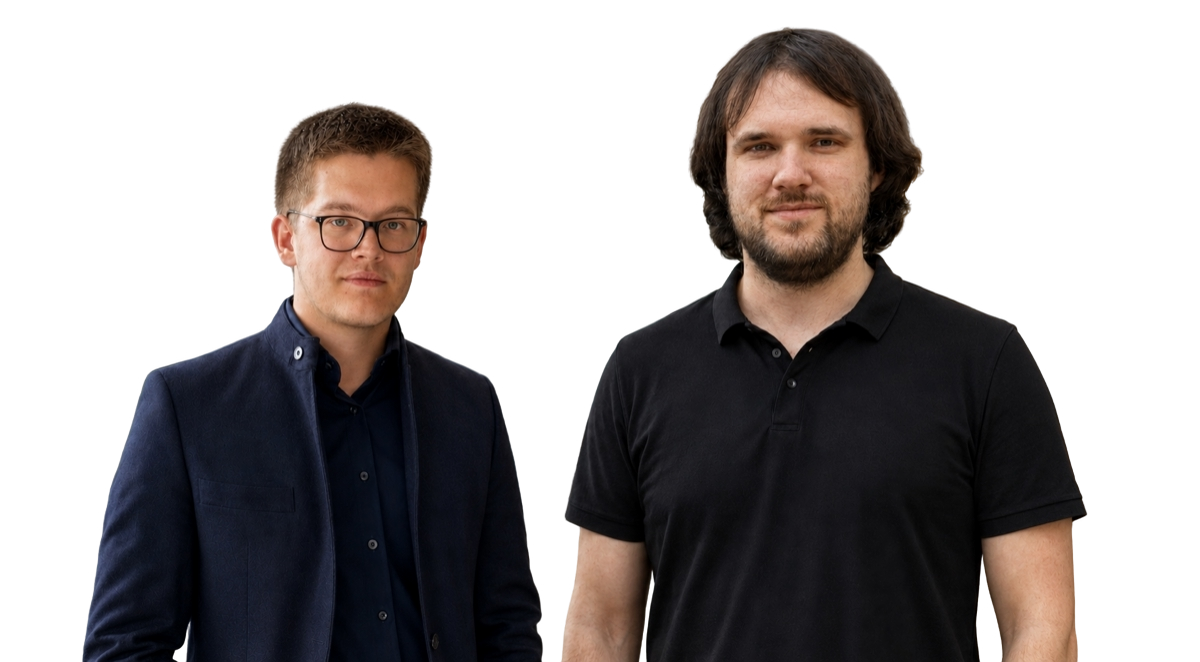
- Straight with Timo and Robin - no sales team, no pitch
- An honest take, including when we are not the right fit
- Concrete next steps for infrastructure, software or AI
No risk: worst case, you leave with a clearer understanding of your project than before.

“WZ-IT's advice on our Azure migration was technically sound and completely non-binding right from the intro call - we took away a great deal.”
What clients say about working with us
From local AI integration to architecture, data sovereignty and ongoing operations.











“WZ-IT moved our studio infrastructure from decentralised individual devices to a central platform: every site is securely connected via VPN, new devices are onboarded automatically and an entire site is provisioned from a template, without manual steps on location. What impressed me most is the breadth and depth of their knowledge: Timo and Robin are not a typical IT provider who sets up a server and leaves. The two of them think their way into highly complex infrastructure and software topics, work through every requirement we put in front of them, and build networking, provisioning and operations so that everything fits together in the end. WZ-IT is an excellent partner for complex software, network and architecture projects.”

Steve Kirchner
Managing Director, nextGYM GmbH

“While looking for a partner to integrate a local AI solution, we came across Timo and Robin - and could not have made a better decision. They quickly understood our requirements and solved technical challenges competently and pragmatically. We were particularly impressed by the straightforward collaboration, their high level of expertise and the speed of implementation. We are delighted to have Timo and Robin at our side as reliable business partners and look forward to our next projects together. (translated)”
Henrik Jeche
Head of IT Administration
ml&s - full-service provider for the electronics industry.


“Communication with WZ-IT was open, friendly and professional from the very beginning. Mr. Wevelsiep and Mr. Zins responded to every one of our questions patiently, promptly and respectfully, and contributed their own suggestions and good ideas on how to modernize our server infrastructure and adapt it even better to our needs. Throughout, WZ-IT consistently kept our need for data sovereignty and GDPR compliance in mind. Even short-notice adjustments and change requests from our side were implemented quickly and patiently and integrated consistently into the overall concept. From planning to the final handover, every step was documented transparently and comprehensively - so if a provider change should ever become necessary, the documentation would let us onboard a successor into our infrastructure very quickly. We are extremely satisfied with WZ-IT and hope to continue working together for a long time.”
Christoph Mußmann
Project Officer, DGHO e.V.
DGHO - German Society for Hematology and Medical Oncology.

“We have had very good experiences with Mr. Wevelsiep and WZ-IT. The consultation was professional, clearly understandable, and at fair prices. The team not only implemented our requirements but also thought along and proactively. Instead of just processing individual tasks, they provided us with well-founded explanations that strengthened our own understanding. WZ-IT took a lot of pressure off us with their structured approach - that was exactly what we needed and is the reason why we keep coming back. (translated)”
Matthias Zimmermann
Managing Director, Annota GmbH
Annota - healthtech startup with an AI documentation assistant.

“I got to know Timo and Robin as dedicated and professional partners who make a lot of things possible for their clients that initially seem impossible. I felt very well advised. The services offered have thoroughly convinced me. (translated)”
Andrea Pawlowski
Communications Manager, Golem.de
Golem.de - leading German IT news outlet.

“Professional, honest and technically thoroughly sound: WZ-IT set up our Proxmox and backup infrastructure securely and future-proof. The consulting from Timo and Robin was objective and needs-driven, the implementation smooth and the final documentation exemplary. You can tell immediately that business-critical infrastructure is thought through holistically from the outset here and implemented with clear ownership.”
Pascal Block
Project Manager, Stadtwerke Brühl GmbH
Stadtwerke Brühl - municipal energy and infrastructure utility.
“With Timo and Robin, you're not only on the safe side technically - you also get the best human support! Whether it's quick help in everyday life or complex IT solutions: the guys from WZ-IT think along with you, act quickly and speak a language you understand. The collaboration is uncomplicated, reliable and always on an equal footing. That makes IT fun - and above all: it works! Big thank you to the team! (translated)”
Sonja Aßer
Data Manager, ARGE
ARGE Neue Medien - master data & digital standards for plumbing and building technology.

“I recently worked with Timo and the WZ-IT team, and honestly, it turned out to be one of the best tech decisions I have made for my business. Right from the start, Timo took the time to walk me through every step in a simple and calm way. No matter how many questions I had, he never rushed me. The results speak for themselves. With WZ-IT, we reduced our monthly expenses from $1,300 down to $250. This was a huge win for us.”
Aleksandr Shuliko
CTO, EVA Real Estate
EVA Real Estate - leading real-estate agency in Dubai.


“WZ-IT manages our Proxmox cluster reliably and professionally. The team handles continuous monitoring and regular updates for us and responds very quickly to any issues or inquiries. They also configure new nodes, systems, and applications that we need to add to our cluster. With WZ-IT's proactive support, our cluster and the business-critical applications running on it remain stable, and high availability is consistently ensured. We value the professional collaboration and the noticeable relief it brings to our daily operations.”
Pascal Hakkers
Aphy AG
Aphy AG - AI platform for hotel back-office.


“WZ-IT provided very competent support in implementing our server and virtualization infrastructure. As part of the project, a Proxmox-based virtualization environment was set up along with a virtual machine for our application systems. Additionally, a structured backup concept was implemented. A particular focus was on security: the setup of a VPN tunnel and the clean implementation of encryption and access concepts were professionally executed. The structured consulting as well as the reliable and swift implementation deserve special mention. We are very satisfied with the services provided and are happy to recommend WZ-IT.”
John Hellmerichs
Managing Director, AInergy GmbH
AInergy - consultancy for energy and facility management.


“Timo and Robin from WZ-IT set up a RocketChat server for us - and I couldn't be more satisfied! From the initial consultation to the final implementation, everything was absolutely professional, efficient, and to my complete satisfaction. I particularly appreciate the clear communication, transparent pricing, and the comprehensive expertise that both bring to the table. Even after the setup, they take care of the maintenance, which frees up my time enormously and allows me to focus on other important areas of my business - with the good feeling that our IT is in the best hands. I can recommend WZ-IT without reservation and look forward to continuing our collaboration! (translated)”
Sebastian Maier
Managing Director, Yonju GmbH
Yonju - business coaching and AI products.


“Counting on WZ-IT team was crucial, their expertise and solutions gave us the pace to deploy in production our services, even suggesting and performing improvements over our configuration and setup. We expect to keep counting on them for continuous maintenance of our services and implementation of new solutions.”
Gabriel Sanz Señor
Managing Director, Odiseo Solutions
Odiseo Solutions - software engineering for the space industry.

Let's Talk About Your Idea
Whether a specific IT challenge or just an idea - we look forward to the exchange. In a brief conversation, we'll evaluate together if and how your project fits with WZ-IT.
Arrange a callback
Companies worldwide trust WZ-IT