







09.09.2026
k3s, k0s, RKE2 or Talos: Kubernetes distributions compared 2026
Comparisons of Kubernetes distributions usually place k3s, k0s, RKE2 and Talos side by side and compare memory footprint and start-up time. That misses the most...

WZ-IT inventories your VMware environment, designs the Proxmox target architecture, and supports the pilot migration, cutover, rollback path, and subsequent operations.

Open licensing model
Open source
Privacy-focused
Planned cutover
Companies worldwide trust WZ-IT
The following are trademarks of their respective owners: VMware (Broadcom Inc.). WZ-IT is an independent service provider and has no business, partnership, or contractual relationship with these companies. We offer independent migration, installation, hosting, and operations services. Proxmox is a trademark of Proxmox Server Solutions GmbH. WZ-IT is an authorized reseller partner of Proxmox Server Solutions GmbH. Our managed services and service levels are agreed separately from Proxmox subscriptions.
Compare technology, operating model, and licensing
Proxmox VE is open source; the enterprise repository and vendor support are available by optional subscription
Clustering & HA are natively integrated
Full control over your infrastructure
Proxmox VE provides all features for production enterprise environments
From simple single-server solutions to highly available enterprise clusters
Ideal for small businesses, development environments, or initial tests
Hetzner AX102: AMD Ryzen 9 7950X3D
Production environment with high availability and automatic failover
Hetzner: 3× AX162-R (AMD EPYC 9454P)
Distributed storage with Ceph for maximum scalability and redundancy
Hetzner: 5× AX162-S (3.84 TB NVMe)
ZFS/Ceph: ECC RAM strongly recommended for data integrity
HA Cluster: Min. 3 nodes for quorum; 2-node only with ext. quorum device
Live Migration: Shared storage (Ceph/iSCSI/NFS) required
Ceph: Only with sufficient hardware (RAM, 10GbE, NVMe) - otherwise ZFS/NFS
Local per node. Snapshots, compression, dedupe. Ideal for single-node or local storage.
⚠ ECC RAM recommended
Distributed storage across all nodes. Self-healing, scalable. For HA clusters with high IOPS.
⚠ Min. 3 nodes, 10GbE network recommended
External NAS/SAN. Shared storage for live migration without Ceph. Simpler with existing storage.
Simple configuration, sufficient for most setups. VLAN support available.
Software-defined networking. VLANs, VXLAN, complex topologies. For large environments.
Integrated SDN in Proxmox. Central management of zones, VNets, subnets.
Tip: Separate network for storage/cluster traffic recommended
Original + 2 backups. PBS local + offsite (e.g., Hetzner Storage Box)
Different storage types: Local (NVMe) + Remote (Object Storage/NFS)
At least 1 backup stored externally. Encrypted, automated, regularly tested
A proven 6-step process for secure migrations
Analysis of your VMware ESXi infrastructure: Document VMs, networks, storage, dependencies, and license situation.
Installation and configuration of Proxmox VE on dedicated hardware (on-prem or Hetzner).
Test migration of individual VMs, check performance and functionality, install VirtIO drivers.
Import VMs to Proxmox (VMDK → qcow2/RAW), reconfigure network and storage.
Start VMs, verify, activate monitoring and backups, final cutover with minimal downtime.
Maintenance, updates, performance tuning, and ongoing support by our team.
Every migration brings challenges - we handle them transparently
VM Compatibility
VMs with vTPM, proprietary VMware drivers, or special vSphere features require adjustments
Network Reconfiguration
vSwitches and port groups need to be mapped to Linux bridges or OVS
Storage Conversion
VMDK disks are converted to qcow2/raw - time-intensive with large data volumes
Downtime During Cut-Over
Brief downtime during final switchover is usually unavoidable
Our Solution: Through careful planning, test migrations, and rollback strategies, we minimize all risks.

Recommended
Full control
We plan VMware-to-Proxmox migrations with a test run, cutover, validation and documented rollback plan.
Validation and an agreed rollback window reduce cutover risk.
Migration, managed hosting, monitoring, and support from a single source - even after migration.
Deep expertise in Proxmox, ZFS, Ceph, clustering, and high-availability configurations.
EU target locations are selectable. We document data flows and advise on data protection and compliance requirements.
The migration scope is quoted transparently after inventory, pilot planning, and target-architecture review.
How we migrated EVA Real Estate's entire infrastructure from AWS to dedicated servers at Hetzner - from $1,300 to $250/month.
Our comprehensive technical guide to migration: component comparison, step-by-step instructions, VirtIO drivers, and practical tips.
Proxmox VE 8 reaches end of life in August 2026. New migrations should target PVE 9.2 with Debian 13.5 and Linux kernel 7.0 directly. Already migrated to PVE 8? We also assess and plan the upgrade to PVE 9.
Read the PVE 8 → 9 upgrade guide →Answers to the most important questions
Topics
Proxmox VE is an open-source virtualization platform (KVM + LXC), free to use, with integrated web interface, storage and network management, without license requirements. Compared to VMware ESXi, Proxmox is significantly more flexible, cheaper, and avoids vendor lock-in.
Typical reasons are high VMware ESXi license costs, increased fees due to license changes (especially after the Broadcom acquisition), desire for cost and vendor independence, and open-source flexibility. Proxmox offers comparable enterprise features without license costs.
Yes. Proxmox offers HA clustering, live migration, ZFS/Ceph storage, integrated backups, and container support - sufficient for SMBs to enterprise workloads.
No - Proxmox is open source under AGPL. There are optional support subscriptions, but the base version is free and includes all features.
Proxmox uses KVM, which runs directly in the Linux kernel - often with equal or better performance than VMware ESXi. With VirtIO drivers and proper storage configuration (e.g., ZFS with SSD), you achieve enterprise performance.
We start with an assessment (VMs, resources, dependencies, network/VLANs, storage, backups) and then build the Proxmox target environment. We then migrate VMs in a pilot test, optimize drivers/performance, and plan the final cutover with minimal downtime.
In practice, downtime mainly depends on the final cutover (last data synchronization, last shutdown/start). For many workloads, the production switch can be scheduled during a maintenance window; we plan it so the interruption is as short as possible (including rollback option).
Classic server VMs (Windows/Linux), web/app servers, database servers, internal tools, monitoring/logging, file services, and many business workloads migrate very well. For special cases (e.g., very hardware-specific appliances), we check compatibility and alternatives in advance.
The most common issues are: driver changes (network/SCSI), UEFI/BIOS mode, Secure Boot/vTPM, network mapping (vSwitch/Portgroups → Linux Bridge/OVS), storage layout, and cutover planning. That's exactly why we always do pilot VMs and a clear migration plan.
Depending on the situation, disks are converted (e.g., to qcow2 or raw) and then attached in Proxmox. For conversions, qemu-img convert is a common approach (defining input/output format).
Yes - Proxmox supports snapshots (depending on storage backend). We coordinate with you whether you prioritize 'VM snapshots for quick rollbacks' or 'backups for disaster recovery' (or both).
Windows runs very well under KVM - the key is usually clean driver/device configuration (e.g., paravirtualized devices) so network and storage perform well. We test each VM (boot, network, services) and then optimize specifically.
Yes - ideally: clean VM inventory, known dependencies (databases, AD, file shares), defined maintenance windows, and current backup status. We also clarify special features (UEFI/Secure Boot/vTPM, special NICs, passthrough) so the plan is realistic.
Yes - we plan the cutover so your VMware environment remains untouched until final acceptance. If something unexpected occurs, you can abort go-live and switch back (rollback plan is part of the planning).
These features can make migrations more complex because they have hypervisor-specific dependencies. We identify such VMs early (e.g., Windows 11, certain security policies) and plan the appropriate target configuration and test steps per VM.
We work with checklists per VM: boot, network, storage I/O, services, monitoring, application function, logs. For critical systems, we also do 'app owner tests' and an acceptance phase before finally shutting down VMware.
Depends on VM count, data volume, and complexity. Small environments can be done in a few days to ~2 weeks; for larger environments, we plan iteratively (pilot → batch waves → cutover) and minimize risk through testing.
We map your VMware networks (Portgroups/VLANs) to Proxmox bridges (or OVS), including tagging/trunks, IP plan, and firewall rules. Goal: same segmentation as before - just under Proxmox.
Usually yes. We plan the cutover so IPs/hostnames remain unchanged as much as possible (or we coordinate DNS/reverse-DNS/firewall changes). If networks need to change, we do it transparently and documented.
Yes - live migration is possible in Proxmox when storage/cluster prerequisites are met (e.g., shared storage or suitable cluster setup). We advise you on which target setup (single-node vs 3-node cluster vs Ceph) meets your requirements.
This depends heavily on your goals: ZFS is very popular for local performance + snapshots (simple/robust), NFS/iSCSI makes sense if you already have NAS/SAN or want shared storage, Ceph for scalable, highly available storage in cluster (with appropriate resources). We choose based on budget, IOPS, HA goal, and team size.
Often not 1:1 as 'native restore' in the new hypervisor - but you can keep them as an additional safety layer (e.g., while VMware still runs in parallel). For Proxmox, many teams then switch to Proxmox Backup Server (PBS) for deduplicated, compressed backups with encryption options.
Pragmatic: regular VM backups + offsite copy + restore tests. PBS is often the foundation because it supports incremental backups (with dedupe/compression) and offsite workflows are easily implemented.
Proxmox includes central web management, cluster functions, and HA mechanisms - without a separate 'vCenter license world'. Whether you need HA immediately or scale later, we clarify based on your SLA requirements.
Yes - Proxmox supports PCI/GPU passthrough for NVIDIA and AMD GPUs. Ideal for AI inference, machine learning, or graphics-intensive applications.
Yes - Proxmox combines KVM VMs with LXC containers, providing maximum flexibility: VMs for heterogeneous operating systems, containers for lightweight services.
Yes - Proxmox is ideal for dedicated servers, both on-premises and in data centers or with hosting providers like Hetzner. This allows VMs and containers to run performantly and flexibly.
Yes. Many customers separate locations/workspaces or implement hybrid architectures. We build it so latency, data residency requirements, and operational effort fit together (including technical documentation of components).
Yes. We operate Proxmox and, where required, PBS with monitoring, updates, backup management, capacity planning, and agreed incident response - on dedicated servers, European infrastructure, or on premises. Documented restore tests can be explicitly added.
Proxmox is actively developed, with regular release cycles, security updates, and community + optional commercial support - so it's maintainable and future-proof long-term.
We assess your VMware infrastructure and define the target architecture, dependencies, pilot, cutover, and operations handover.
Non-binding initial assessment · Response usually within one business day
We also carry out the orderly switch to Proxmox from Hyper-V and Nutanix environments - with the same end-to-end approach.
Before migration
The exit check provides a Proxmox target design, risks, migration waves and a reliable implementation framework before production systems change.
For professional secrecy holders
If Proxmox processes client, patient or other professional secrets, WZ-IT plans the application, infrastructure, access, backups and ongoing operations within a purpose-built operating model.
Describe the source platform, workloads, and available cutover window.
09.09.2026
Comparisons of Kubernetes distributions usually place k3s, k0s, RKE2 and Talos side by side and compare memory footprint and start-up time. That misses the most...
07.09.2026
Coverage of VMware pricing works with large numbers: fourfold increases, 60 per cent extra cost, percentages from analyst reports. Such figures are striking and useless...
30.06.2026
Within a few weeks in 2026, two Linux kernel local privilege-escalation flaws were published that work the same way: CVE-2026-46331 (nicknamed "pedit COW") and CVE-2026-43503...
15.06.2026
For many - us included - Hetzner was the obvious answer to expensive hyperscalers for years: cheap, solid, operated in the EU. That is exactly...
24.05.2026
Proxmox VE 9.2 has been available since May 21, 2026. On paper, it is a minor release. In practice, it matters much more for many...
08.05.2026
Three critical Local Privilege Escalation vulnerabilities in the Linux kernel within two weeks — all three sitting in the code for nine to twelve years....
05.05.2026
With Proxmox Backup Server 4.2 (released late April 2026), S3-compatible object storage is officially supported as a backup backend. No more tech preview label, no...
No risk: worst case, you leave with a clearer understanding of your project than before.


“WZ-IT's advice on our Azure migration was technically sound and completely non-binding right from the intro call - we took away a great deal.”
Customer feedback on virtualization, backup, VPN, security and ongoing cluster operations.
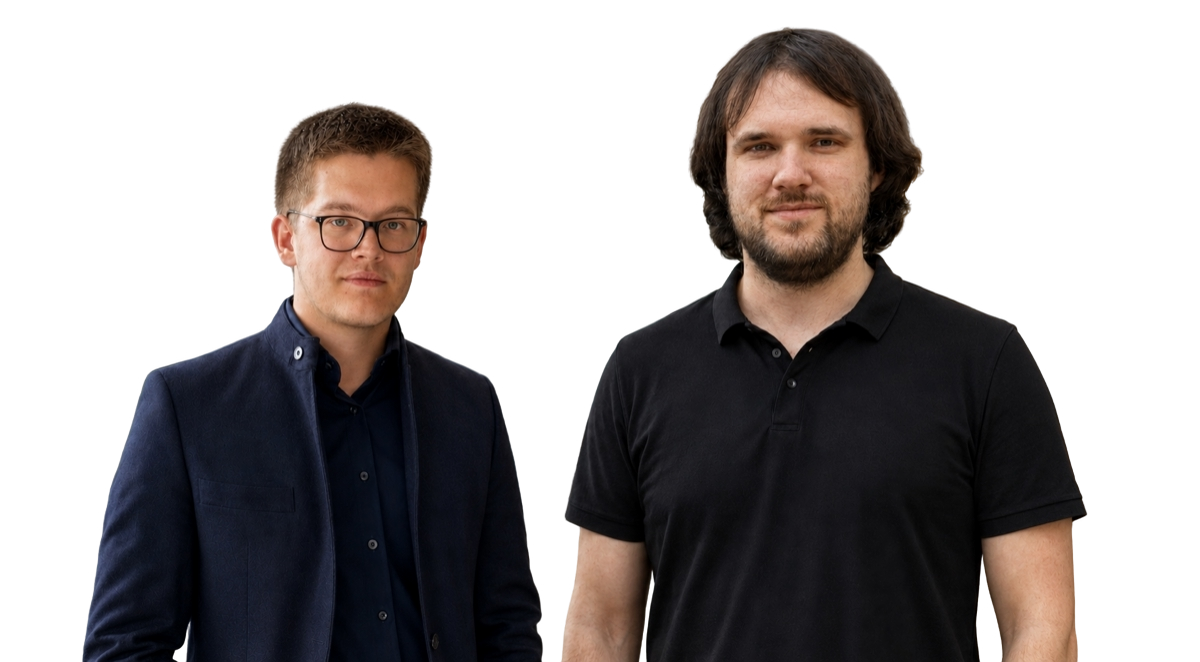
“WZ-IT moved our studio infrastructure from decentralised individual devices to a central platform: every site is securely connected via VPN, new devices are onboarded automatically and an entire site is provisioned from a template, without manual steps on location. What impressed me most is the breadth and depth of their knowledge: Timo and Robin are not a typical IT provider who sets up a server and leaves. The two of them think their way into highly complex infrastructure and software topics, work through every requirement we put in front of them, and build networking, provisioning and operations so that everything fits together in the end. WZ-IT is an excellent partner for complex software, network and architecture projects.”

Steve Kirchner
Managing Director, nextGYM GmbH

Whether a specific IT challenge or just an idea - we look forward to the exchange. In a brief conversation, we'll evaluate together if and how your project fits with WZ-IT.